The 3 A.M. Myth: Are Slots Secretly Loosened for the Graveyard Crowd?

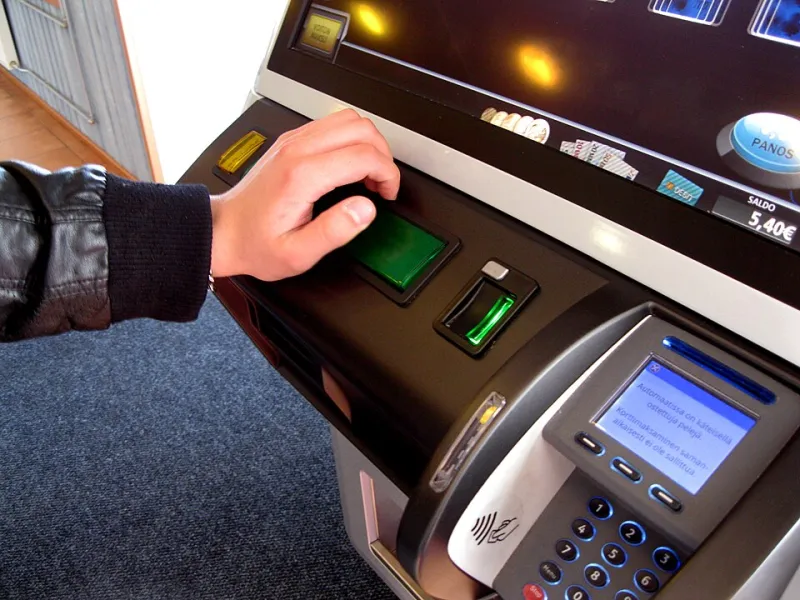
Photo: Ken Lund from Reno, Nevada, USA, CC BY-SA 2.0, via Wikimedia Commons
Ask around any casino floor in America at two in the morning and you'll hear it, whispered between spins like a state secret: the machines open up after midnight. Maybe it's the Vegas version, maybe the tribal casino version, maybe the online version where the lobby supposedly gets 'looser' once the East Coast goes to bed. The details change. The belief doesn't.
We wanted to know if there's anything under the hood. So we did what Sodo969Z does best — chased the numbers until they confessed.
What the Math People Say (Spoiler: It's Not Much)
Every modern slot machine — physical or online — runs on a Random Number Generator. The RNG is a chip or software routine that spits out number combinations thousands of times per second, whether anyone's playing or not. The moment you hit spin, the machine grabs whatever number is on deck and maps it to a reel result.
Here's the part that kills the 3 a.m. theory dead: the RNG doesn't know what time it is. It doesn't have a clock, a calendar, or a manager whispering 'tighten up the 7 p.m. crowd.' The payback percentage — say, 96% on a typical online slot — is baked into the reel strips and paytable at the factory. Changing it means physically swapping chips or pushing a regulatory-approved software update, and in every US jurisdiction, that's a paper-trailed event. There's no remote 'loosen up at midnight' toggle that a floor boss can hit between coffee runs.
A game mathematician we spoke with put it bluntly: 'The idea that a slot knows it's 3 a.m. requires the machine to have awareness it simply doesn't have. It's a very expensive random number picker, nothing more.'
So Why Does the Legend Refuse to Die?
Because — and this is the interesting part — the players who swear by it aren't lying. They're just misreading the data their brains are feeding them. A few very real things converge in the dead hours:
1. Fewer players, louder wins. At 3 a.m., a casino floor might have forty people on it instead of four hundred. When someone hits a handpay in a half-empty room, it echoes. Every jackpot bell, every cheer, every slot attendant walking over with a clipboard registers in your memory. During a packed Saturday night, the same win is a drop in the bucket of noise. Your brain concludes: this place pays at night. It's survivorship bias with a soundtrack.
2. Fatigue rewrites your ledger. Nobody tracks results well at 3 a.m. You're tired, your session blurs together, and your memory quietly files the wins under 'recent' and the losses under 'earlier.' By sunrise, you're convinced the back half of your session was the profitable half, even if the math says otherwise.
3. Denominations and locations shift. Graveyard crowds tend to play lower-denomination machines — pennies and nickels — which often have worse payback percentages than the high-limit room. Some players interpret the resulting churn of small, frequent hits as a machine 'running hot,' when it's really just volatility doing its thing on a cheap game.
4. Confirmation bias compounds. Once you believe the midnight theory, every after-hours win becomes evidence and every after-hours loss becomes an exception. That's how a myth survives decades of contrary data.
The Online Version of the Myth
Online slots add a fresh coat of paint to the same superstition. Forum threads insist that offshore or sweepstakes casinos 'cycle' their payouts, loosening the lobby during slow hours to keep the night owls depositing. But licensed US online casinos — the ones regulated in states like New Jersey, Michigan, and Pennsylvania — run the same certified RNG math around the clock. Their software is tested by independent labs, and the return-to-player figures are published right in the game info screens. An algorithm that changed behavior by the hour would flunk certification in a heartbeat.
That said, online play at odd hours does change one thing: you. Fewer distractions, fewer bonuses being pushed, quieter chat — your decision-making is the variable, not the machine.
What Graveyard-Shift Veterans Actually Notice
We asked people who've worked casino overnights for years, and their observations are more mundane — and more useful — than any payout schedule:
- Comps get easier after midnight. With fewer players competing for attention, hosts and automated loyalty systems often treat overnight play more generously. That's a real edge, just not the one the myth promises.
- Table minimums drop. Overnight is when $15 blackjack becomes $5 blackjack. If you're going to play something with a skill component, 3 a.m. is genuinely the cheapest time to do it.
- Jackpots do get hit at night — because jackpots get hit whenever the reels land on them. Wide-area progressives in Nevada and beyond hit at all hours; the timestamps just feel more dramatic at night because nobody's awake to see the others.
The Bottom Line for Your Bankroll
The 3 a.m. payout pattern isn't a pattern. It's a mirror. What players are detecting in the small hours isn't a loosened slot — it's a tired brain, a quiet room, and a memory that edits itself in the casino's favor.
If you love the graveyard session, play it. There's something genuinely great about a quiet floor, a cup of bad coffee, and a machine to yourself. Just walk in with the same budget you'd bring at noon, because the RNG is just as indifferent to you at 3 a.m. as it was at 3 p.m.
The machines don't know what time it is. But your body does — and that's the number worth watching.