Mirror, Mirror on the Machine: Why Some Gamblers Trust Only Numbers That Read Both Ways
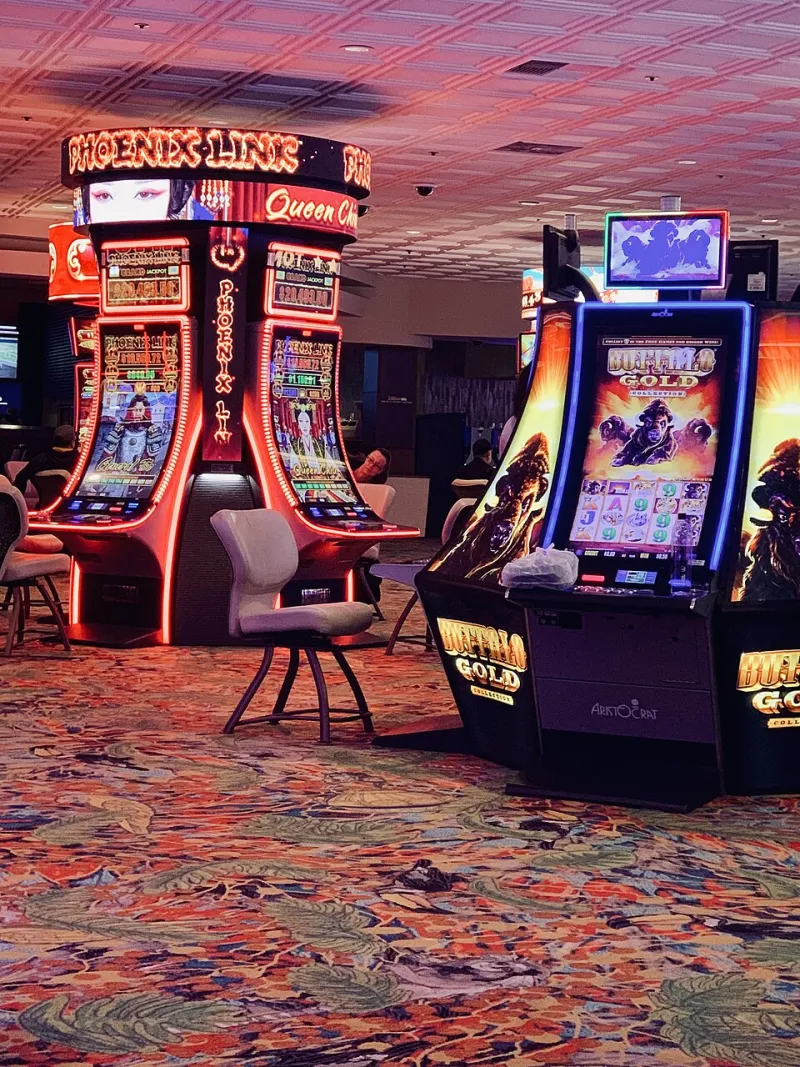
Photo: Lchung9779, CC BY 4.0, via Wikimedia Commons
The Bet That Reads Both Ways
Somewhere in Reno right now, a player is betting $969 on a blackjack shoe. Not $950. Not $1,000. Nine-sixty-nine — because it reads the same coming and going, and to them, that symmetry means something. It's not math. It's not card counting. It's a belief system built on reversible digits, and once you start noticing it, you'll see it everywhere on a casino floor.
Palindromes Have Been Riding Along for a Century
Number superstition in American gambling is old news. Dice shooters have whispered about seven for generations, and craps tables still go quiet when somebody rolls a hardway pair. But palindromic numbers occupy a stranger corner of the folklore. These aren't lucky digits in the usual sense — they're numbers that refuse to change direction.
Old-timers talk about lottery pools in the 1970s where players picked 737, 848, 292 — sequences that looked the same on a mirrored wall. Gas station scratch-off regulars in Texas and Florida have long gravitated toward ticket numbers with matching bookends. And in the video poker dens of Las Vegas, denominations like $0.99 and $9.69 have attracted a devoted following of players who consider a mirrored price point a good omen.
The number 969, in particular, has a small cult around it. Ask around and you'll hear the theory: a number that flips on itself can't be knocked off its path. Wins come back around. Losses reverse. It's folklore, sure — but folklore with staying power.
What Symmetry Does to Your Brain
There's actual psychology underneath the superstition. Researchers who study numerical cognition have found that humans process symmetrical patterns faster and rate them as more pleasing — a bias sometimes called processing fluency. When something feels easy to understand, we tend to trust it. A palindrome is the easiest number there is: your brain reads it once and gets a free confirmation pass reading it backward.
That fluency translates into a false sense of reliability. The same mental shortcut makes people prefer round numbers in estimates, trust logos with balanced designs, and feel that 969 is somehow "more solid" than 968. None of it changes the house edge. The RNG doesn't know what a palindrome is. But the feeling is real, and feelings drive bets.
The Players Who Build Bankrolls on Reversible Digits
We talked to a handful of self-described "mirror players" — folks who organize real money around this stuff. A retiree from Ohio told us he sizes every slot session in palindromic chunks: $121, $252, $484. A sports bettor in New Jersey refuses to place wagers ending in anything but mirrored pairs. One video poker regular we spoke with only plays machines at the $0.69 or $9.69 denomination level, calling it her "flip number."
The interesting thing? Most of them know it's irrational, at least halfway. "I know the machine doesn't care," one player said. "But the palindrome gives me a rule, and a rule keeps me from chasing." That's the quiet utility hiding inside the superstition. Fixed, arbitrary bet-sizing structures — whether based on palindromes, birthdates, or moon phases — can actually slow down impulsive play. The number is a talisman; the discipline is the real benefit.
License Plates, Lottery Picks, and the 969 Economy
The superstition leaks beyond the casino. Vanity plates reading 969 or 858 show up in parking lots at tribal casinos across the country. Lottery players routinely play palindromic picks, and when one hits — like the famous draw results featuring mirrored combinations — social media lights up with screenshots of winning tickets that "read both ways."
Some regional lottery retailers even report spikes in palindrome plays after viral posts. The number 969 shows up in usernames, bet amounts, and tip amounts at sportsbooks. Whether the brand matters or the brand followed the culture is hard to untangle — but numbers with symmetry have a magnetic pull on gamblers, and always have.
The Honest Takeaway
Here's the neutral truth: a palindrome has exactly as much influence on your next spin as any other number — none. The reels don't read. The cards don't count. But if a mirrored bet size keeps your sessions structured, your stakes consistent, and your bankroll from bleeding out on tilt, then the 9-6-9 crowd is getting something valuable from their superstition, even if it's not luck.
Flip a number, and it stays the same. That's the appeal. Just make sure the only thing staying the same at the end of the night is your budget — not your losses.