Sixteen Minutes of Solitude: An X-Ray of a Single Online Slot Session

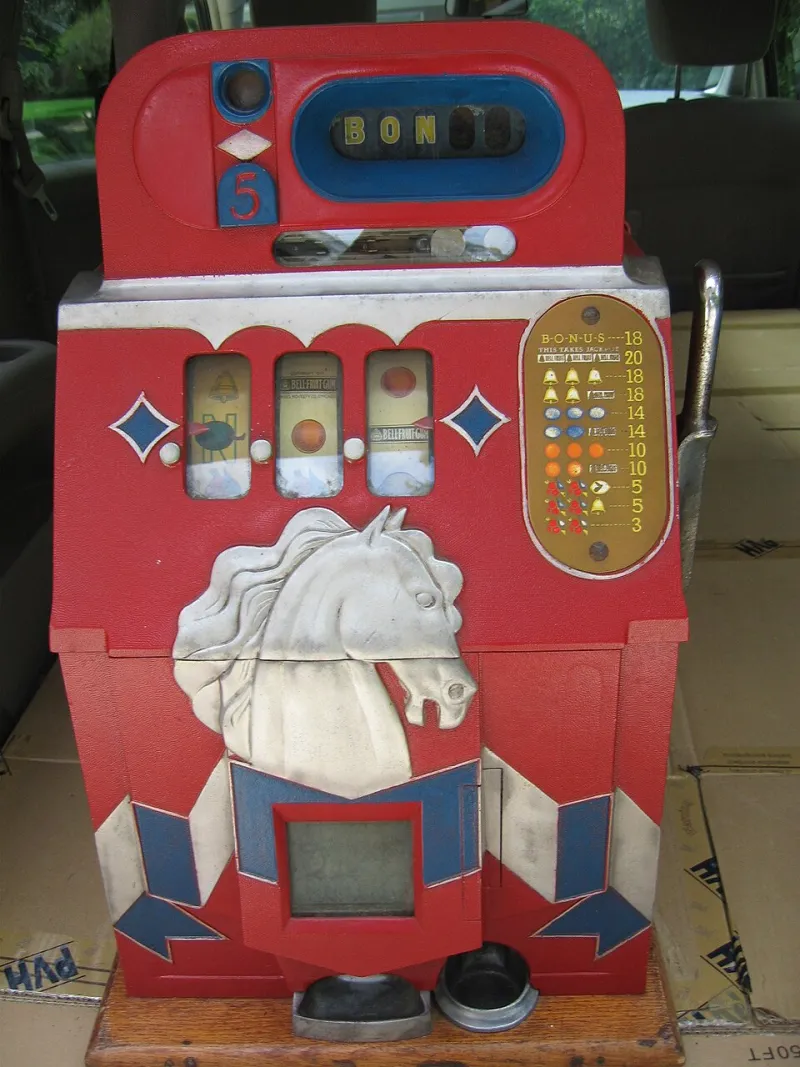
Photo: User:Bluemoose, CC BY-SA 3.0, via Wikimedia Commons
You hit the spin button at 7:42:15 PM. The reels stop at 7:42:18. The whole thing took three seconds, so most players assume the story starts and ends there.
It doesn't. The story started before you opened the app, and it keeps running long after the reels lock into place. We wanted to see what one average session — call it 969 seconds, roughly sixteen minutes, a number we're a little fond of around here — actually looks like when you peel back the glass. What follows is a composite walkthrough, built from published math models, regulator filings, and a healthy dose of industry scuttlebutt. No single session contains all of this, but every session contains some of it.
Second Zero: The Spin Already Ended
Here's the part that surprises people most: the outcome of your spin is decided the instant you press the button. Sometimes the server resolves it before the animation even loads.
Online slots run on a random number generator — an algorithm that's constantly cycling through number combinations, thousands per second. When you hit spin, the system grabs the current RNG value, maps it to a reel position, and files the result. Everything after that is theater. Beautiful, expensive, carefully tested theater, but theater nonetheless.
The reels you watch spinning? They're a visualization of a decision that's already been made. That's not a trick in the shady sense — it's how regulated slots have always worked, going back to the electromechanical machines in Vegas. The difference online is that the decision and the display are entirely decoupled.
Seconds 3 Through 40: The Math Recalculates
Once the result lands, a cascade of housekeeping happens in the background:
- Your balance updates, and the game logs the wager-to-return ratio for that spin
- The session's running RTP tracker ticks over — casinos and regulators care about this number across thousands of spins, not dozens
- Loyalty points, if you're in a rewards program, get calculated off your wager, not your win
- The game checks whether this spin advanced you toward a bonus round, a jackpot pool, or a progressive meter
That last one matters more than players realize. Many modern slots use what's called a "collect" or "trigger bank" — certain symbols nudge an internal meter upward. The meter isn't luck in the moment-to-moment sense; it's a designed pacing mechanism that determines roughly when the feature hits, even if it can't determine whether the feature pays.
The Near-Miss Problem: Seconds 40 Through 300
Somewhere in the middle stretch of a session, you'll almost certainly see it: two bonus symbols land, the third one drifts down and stops one position short. Your stomach does the thing.
Here's the uncomfortable truth from the game-design side. On many video slots, each reel is an independent strip with its own weighting. Reel one might hold bonus symbols more densely than reel five, which means the two-symbol setup shows up far more often than a true three-symbol setup. The game never lies — every combination has a real probability — but the architecture of the reels makes the near-miss a regular guest at your table.
Regulators require that near-misses not be artificially programmed above natural frequency, and in licensed US markets they generally aren't. But natural frequency, given weighted reels, is already dramatic enough. The screen knows exactly what it's doing.
The Bonus Round: Seconds 300 Through 600
When the feature finally triggers, the session changes texture. Free spins, pick-a-prize rounds, hold-and-win respins — the mechanics vary, but the math logic is consistent: the bonus round is where the game pays back a huge chunk of its advertised RTP. On some popular titles, 30% to 40% of total return is locked behind the feature.
Which means long stretches between bonuses aren't the game being stingy. They're the game being honest. A slot that pays little in the base game and dumps its value in features is just doing its accounting in a different room. Players who understand this stop expecting the base game to carry them and start treating spins between bonuses as the admission price.
Seconds 600 Through 900: The Quiet Observer
While you're playing, a second layer of software is watching. Not in a creepy way — in a compliance way.
Licensed US platforms run session-tracking systems that log every wager, flag abnormal patterns, enforce deposit limits and cool-off periods, and feed responsible-gaming dashboards. If you set a $200 loss limit, this is the machinery that actually stops you at $200. If your play pattern shifts suddenly — bigger bets, longer sessions, chasing — some platforms surface a check-in prompt.
This is, frankly, one of the genuinely good developments in online gambling. The corner store with the lottery machine has nothing like it.
The Last Sixty-Nine Seconds: The Exit
Toward the end of a session, most players hit one of three exits: they hit a win and cash out, they hit their limit and stop, or they drift out on autopilot. The game doesn't care which — the RNG will still be cycling at the same speed tomorrow.
But here's the takeaway from our sixteen-minute X-ray: every visible moment of a slot session is downstream of invisible math. The spin you see is three seconds. The systems that produced it — RNG, reel weighting, bonus pacing, compliance logging — run continuously whether you play or not.
Understanding that doesn't make the games less fun. It makes them legible. And legible games are the only kind worth your sixteen minutes.