Last One in Line, Please: The Corner Store Lottery Ritual That Won't Go Quietly Digital
Photo: Michael Trolove, CC BY-SA 2.0, via Wikimedia Commons
There's a moment every Friday afternoon in Chalk River, Ohio — population 4,200, give or take a few lottery winners — when Del's Corner Market becomes the most important building in town.
It's not because of the gas. It's not because of the hoagies, which are honestly better than they have any right to be. It's because at 4:45 p.m., a line starts forming at the lottery counter that won't fully dissolve until the Powerball cutoff at 9:59, and somewhere in that line, half the town catches up on the other half's business.
The Queue Is the Point
If you've never stood in a small-town lottery line, you might assume it's a chore — dead time between buying the ticket and checking the numbers. In Chalk River, it's the opposite. The line IS the product. The ticket is a souvenir.
"I've heard about engagements in that line," Del Marchetti, the store's third owner since 1979, told me over the hum of the coolers. "Divorces, too. Retirements. Somebody's kid getting into Ohio State. You stand next to a guy every Friday for fifteen years, you're going to know him."
The rituals are precise. Earl, 78, always lets exactly three people go ahead of him — "my numbers," he says, and nobody questions it. The women from the church quilting group arrive as a block and buy their tickets in the same order every week, rotating who pays. A man everyone calls Nine Lives buys nine scratch-offs and scratches them right there on the counter, win or lose, before he leaves.
This is the part that national coverage of lottery culture never quite captures. The national story is about jackpots and odds. The local story is about a standing appointment.
Then the Phones Showed Up
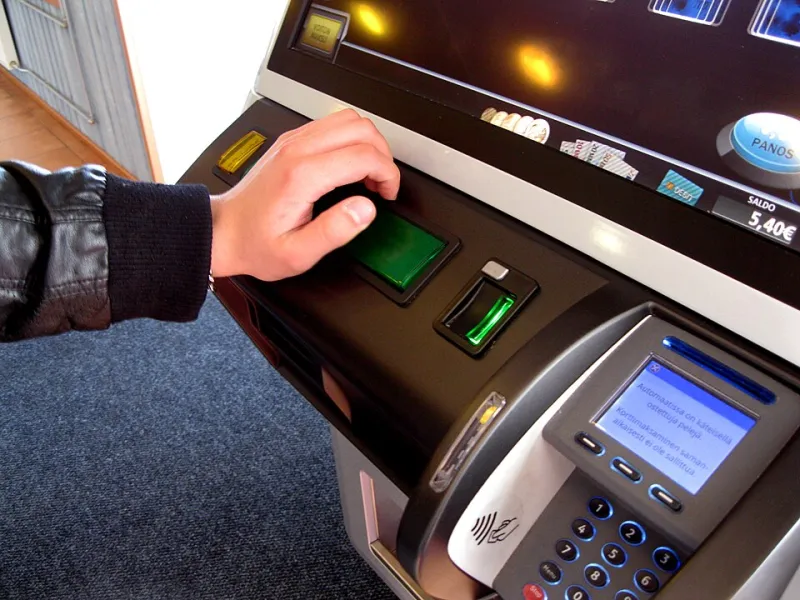
About two years ago, the state expanded its online lottery platform, and third-party ticket courier apps started advertising during every sports broadcast. You know the pitch: play from your couch, never miss a draw, get bonus credits on your first deposit. Some of it reads a lot like the bonus offers you see splashed across online casino sites — free plays, matched deposits, loyalty points.
It works. That's the problem, depending on who you ask in Chalk River.
Del's Friday line is down maybe a third from its peak. A few regulars have fully converted. The quilting group has lost two members to the app — one of whom still shows up, she just doesn't buy anything, which Del finds both funny and a little heartbreaking.
"Convenience is a real thing," Del shrugs. "I get it. It's cold in January. But you can't chat up a phone screen."
Who Actually Wins the Migration?
Here's the uncomfortable math that nobody in the line likes to say out loud. Online play is stickier. App users, studies and industry data suggest, tend to play more often, across more games, with autoplay features and push notifications nudging them along. The Friday ritual, whatever its quirks, had a built-in ceiling: you played when you stood in line, and when the line was gone, you went home.
The app has no line. The app is always open.
Earl put it more bluntly, still insisting on his three-person buffer: "On my phone, I spend forty bucks and don't remember doing it. At the counter, forty bucks means handing Del forty dollars and him looking at me like he knows my wife."
That's not nostalgia talking — that's friction, and friction has always been the quiet guardian of the casual gambler. Every step of the old process, from driving to the store to waiting in line to counting out cash, was a speed bump. Digital play removes the speed bumps and then wonders why some people drive off the road.
The Store Fights Back
Del isn't going down without adapting. He's leaned into what the app can't do. There's now a coffee pot that runs all Friday, free, for anyone in line. He started a store pool for big jackpots — one shared ticket, twenty players, the winnings split, the drama included at no extra charge. Attendance for the pool nights is actually UP from the old baseline.
"Turns out people didn't miss the ticket," he says. "They missed each other. You can't split a jackpot with an app."
There's a lesson in that for the online gambling world, and it's one worth taking seriously as more states roll out digital lottery and casino options. The industry has spent years making play faster, smoother, and more frictionless — and it's very good at it. But the data point Del discovered by accident is the same one community-focused operators keep rediscovering: gambling has always been as much a social technology as a game of chance. The numbers on the ticket matter less than who's standing next to you when you check them.
Nine Lives, Still Scratching
I caught up with Nine Lives on his way out, nine fresh scratch-offs under his arm, three of them winners for a combined $38. He's never downloaded the app and never will, as far as he's concerned.
"I like the sound," he said, tapping the coin in his pocket. "The little scraping sound. My phone doesn't make that sound."
He got in his truck and left, and the line behind him kept talking. Somewhere across town, presumably, someone's phone buzzed with a push notification and they tapped through without thinking twice.
Both of them are gambling. Only one of them is doing it in a room full of people who know his name. Whether that difference survives another decade of digital switch-over is the bet nobody in Chalk River wants to make — but everybody, quietly, is watching the odds.